
Zenith Law: Engineering and Governance
Strategist | Engineer | Researcher | Trainer
A career built through deliberate pivots across domains, each deepening rather than replacing what came before. Zenith Law is a polyglot hands-on engineer with strategic and visionary sense who began in telecommunications and gaming infrastructure, moved through financial technology inside large international banks, built and ran an accredited training organisation, led technical delivery for a regulated healthcare platform, and now works on industrial IoT platforms and edge network simulation systems. He codes across Go, Python, Java, TypeScript, and C#/.NET, treating the stack as a whole from binary protocol debugging through cloud infrastructure provisioning to accessible and performant user interfaces. Data architecture runs as a consistent thread across roles, applied within the regulatory environment of each domain, and building and governing AI-augmented engineering tooling forms part of current daily practice. He operates as an executive-tier individual contributor who shapes technical strategy, drives organisational impact, and bridges the gap between deep engineering and business goals. The background extends beyond engineering into law, doctoral research in Data Science, published work in information security, and certifications spanning security, governance, risk, and project management, supporting work where explanations, auditability, and compliance matter.
Posts by Zenith Law
30
Published 5 September 2026 by Zenith Law
Stablecoins are now routine settlement infrastructure, yet the mechanics that make them work as payments are widely misunderstood. This review draws on identified sources, from the FCA consultation on UK stablecoin issuance and the Bank of England...
Published 14 July 2026 by Zenith Law
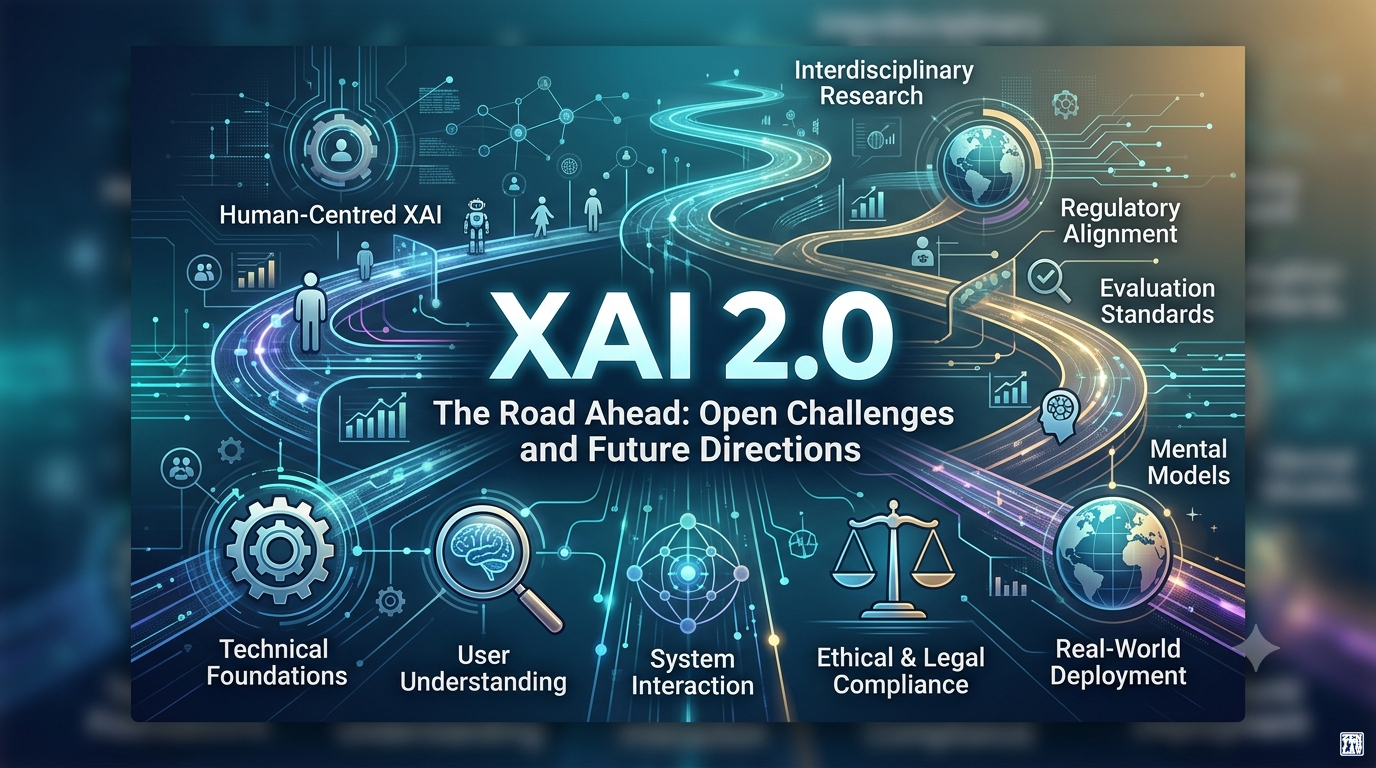
The XAI 2.0 manifesto identifies 28 open problems across nine categories, spanning new types of AI, evaluation, human-centred explanation, and societal impact. This final article in the series synthesises those problems, connects them to the findi...
Published 10 July 2026 by Zenith Law
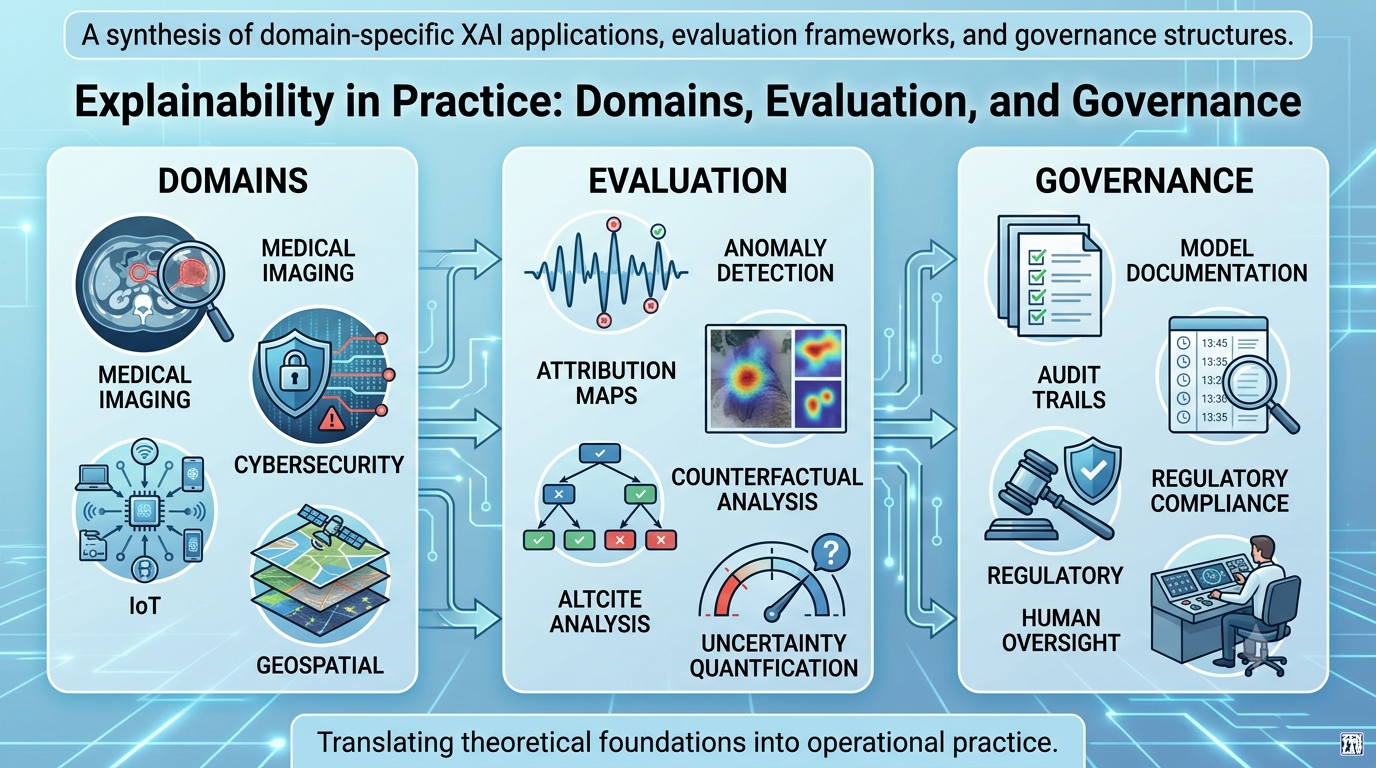
The previous articles established foundations, methods, and limits. This article examines how XAI is applied in practice across domains, how it is evaluated, and what governance structures are needed. Domain applications from medical imaging to cy...
Published 6 July 2026 by Zenith Law
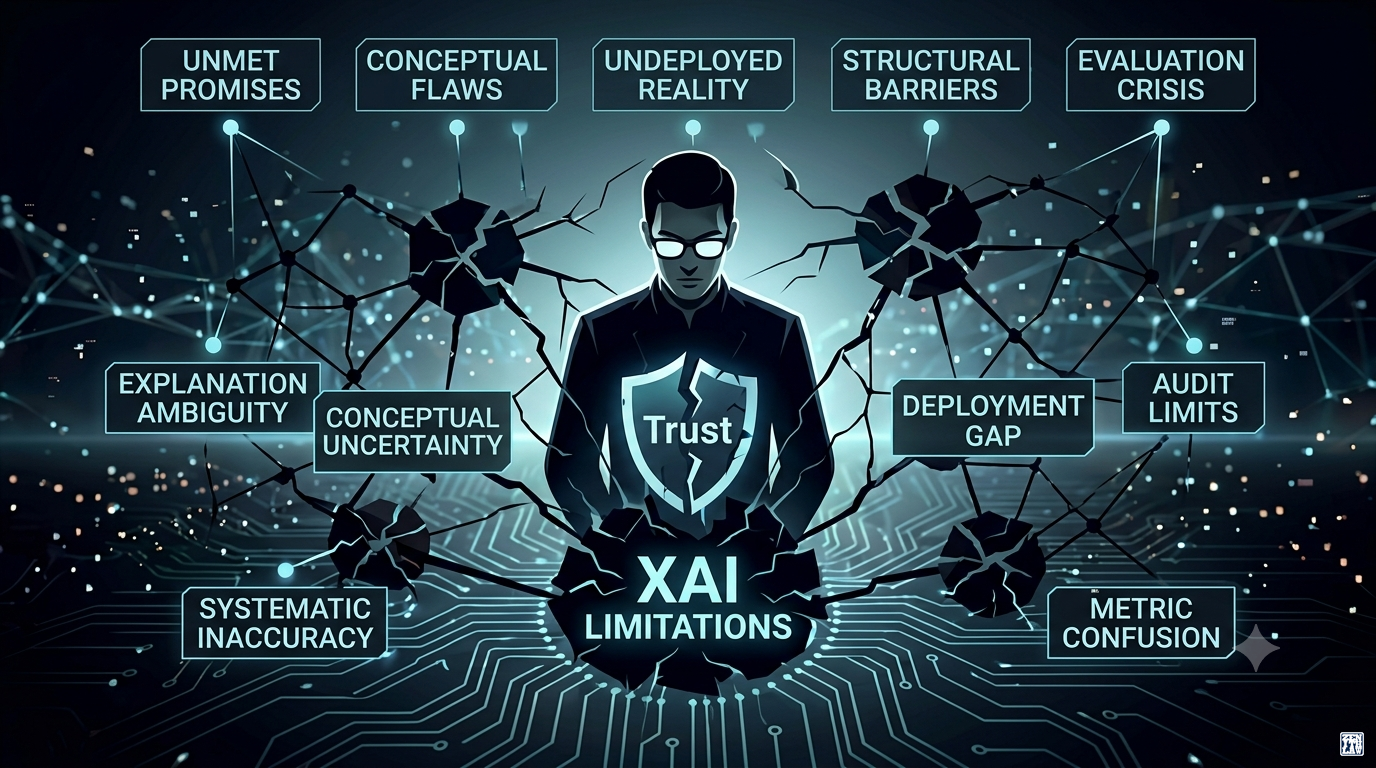
Five papers converge on an uncomfortable finding: current explainability methods are less reliable than their advocates claim. Ghassemi et al. argue that explainable AI cannot deliver trust, transparency, or bias mitigation for clinical decisions....
Published 2 July 2026 by Zenith Law
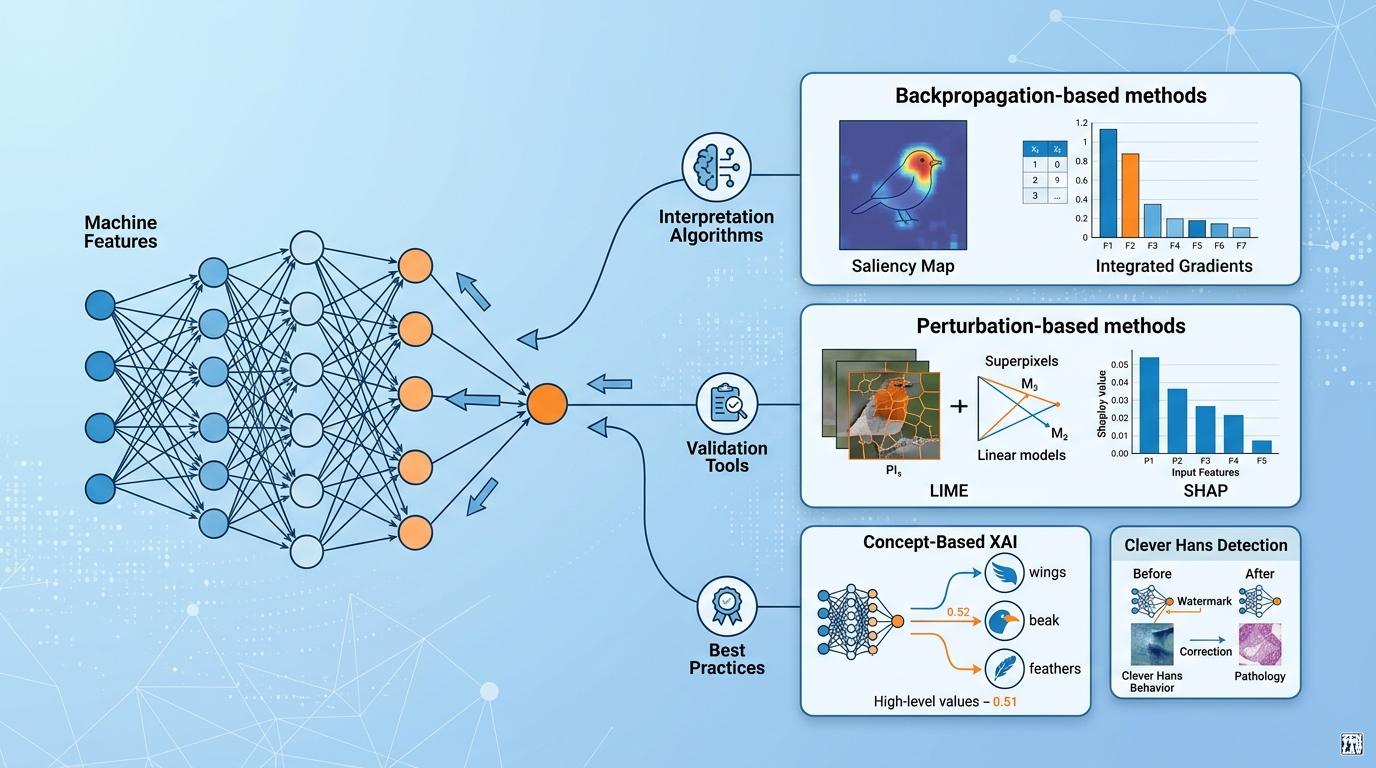
Four papers covering the full spectrum of explanation methods: the authoritative review of post-hoc methods with axiomatic foundations by Samek et al., the demonstration of explanation methods as model validation tools by Lapuschkin et al., the ta...
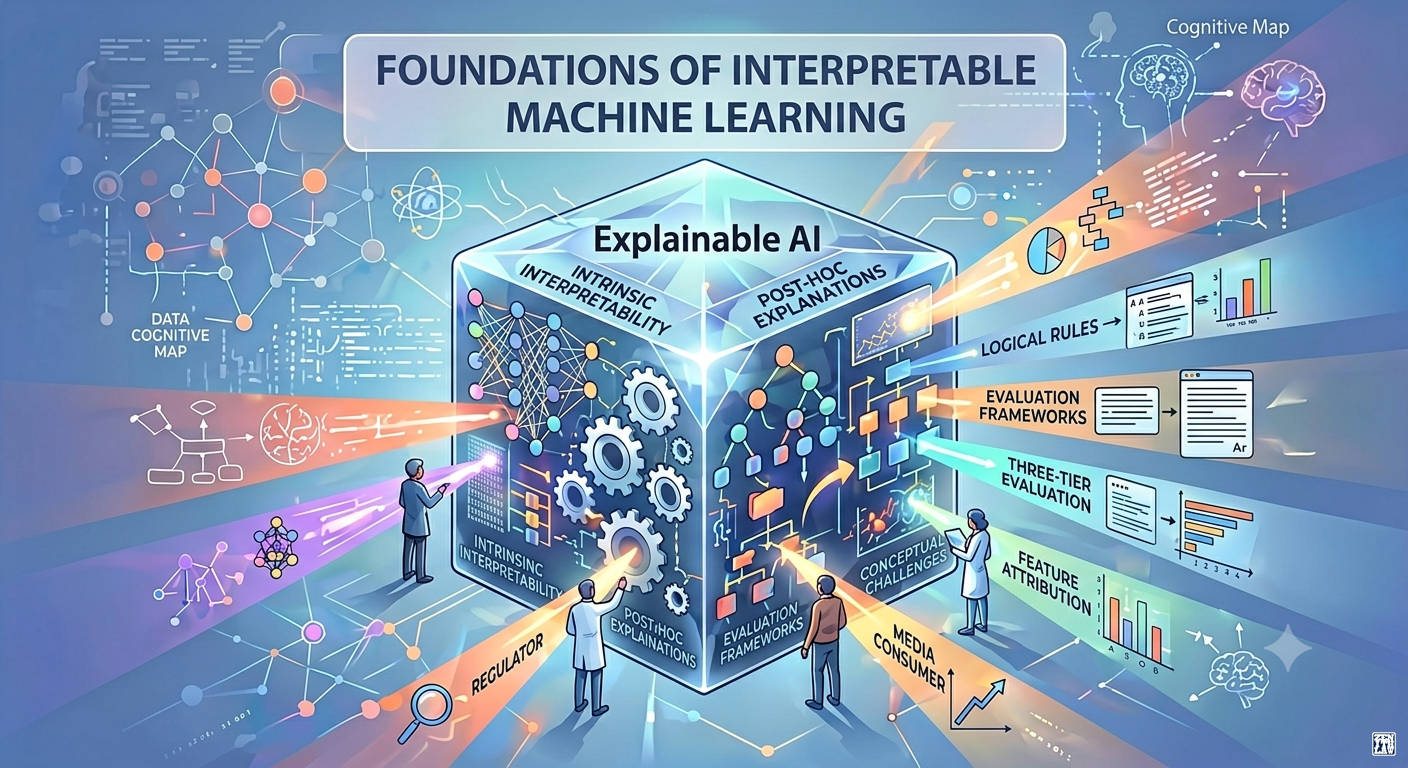
Published 28 June 2026 by Zenith Law
Five papers, spanning 2017 to 2022, collectively establish what interpretability means, how to evaluate it, and where the conceptual boundaries lie. Doshi-Velez and Kim's three-tier evaluation framework, the comprehensive taxonomy of Barredo Arrie...
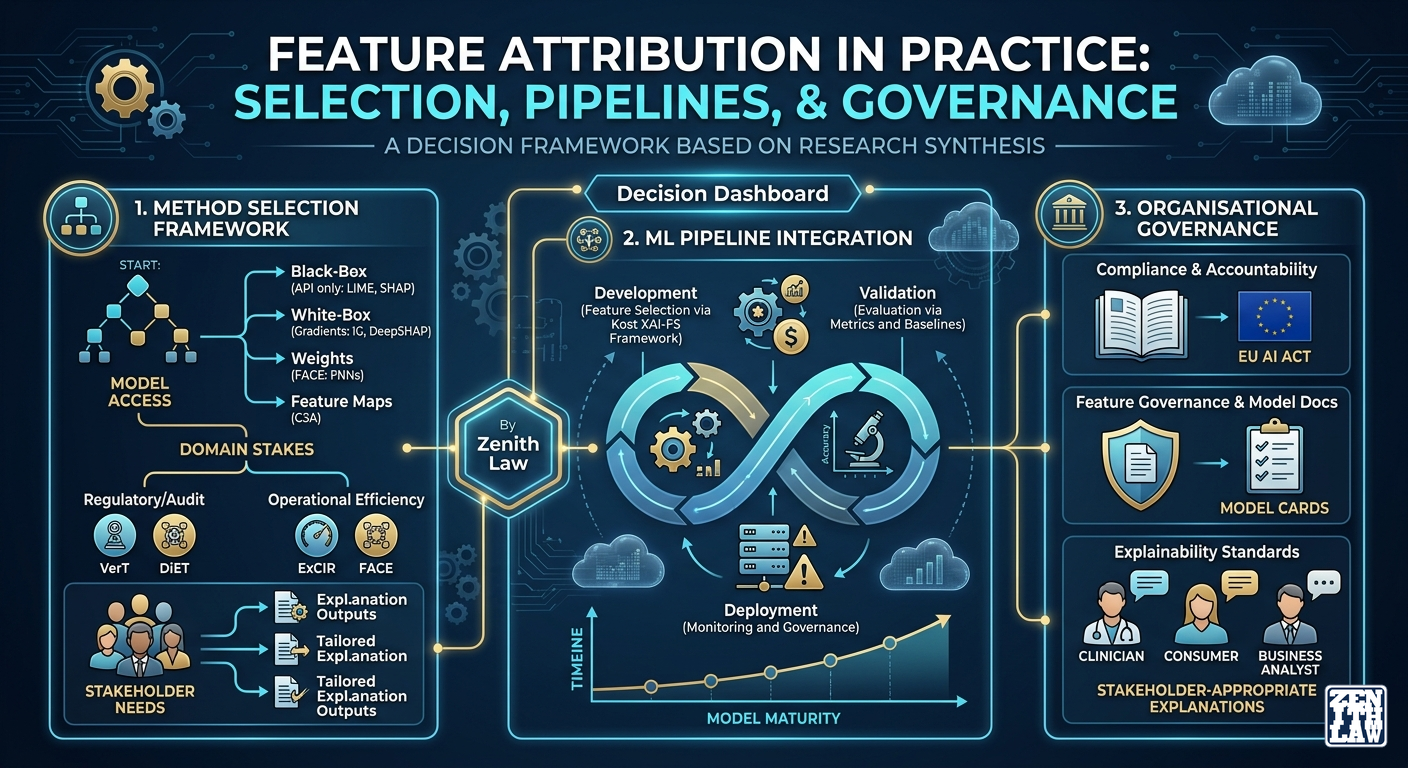
Published 26 June 2026 by Zenith Law
Four articles. Fifteen core papers. Diverse domains. This final article in the series translates the research into practice: how to select an attribution method given your model type, domain, and accountability requirements; how to integrate attri...

Published 22 June 2026 by Zenith Law
Feature attributions conflate correlation with causation. A feature that co-varies with the target receives high importance even when it plays no causal role in the decision of the model, a vulnerability that a 2020 proof showed is inherent to con...
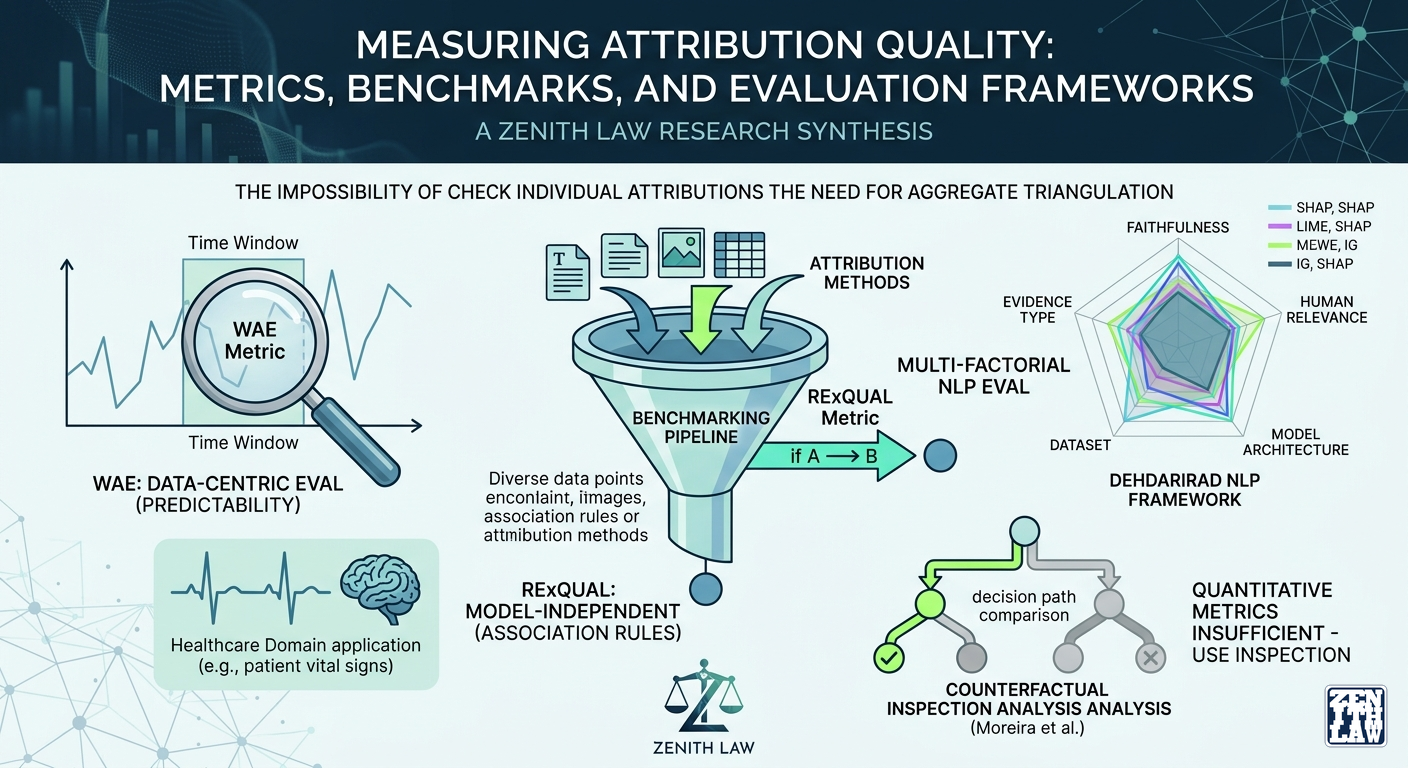
Published 18 June 2026 by Zenith Law
If standard attribution methods cannot be verified for individual cases without model adaptation, how should they be evaluated? The answer is aggregate benchmarking, but the literature disagrees on both the metrics and the methodology. WAE evaluat...
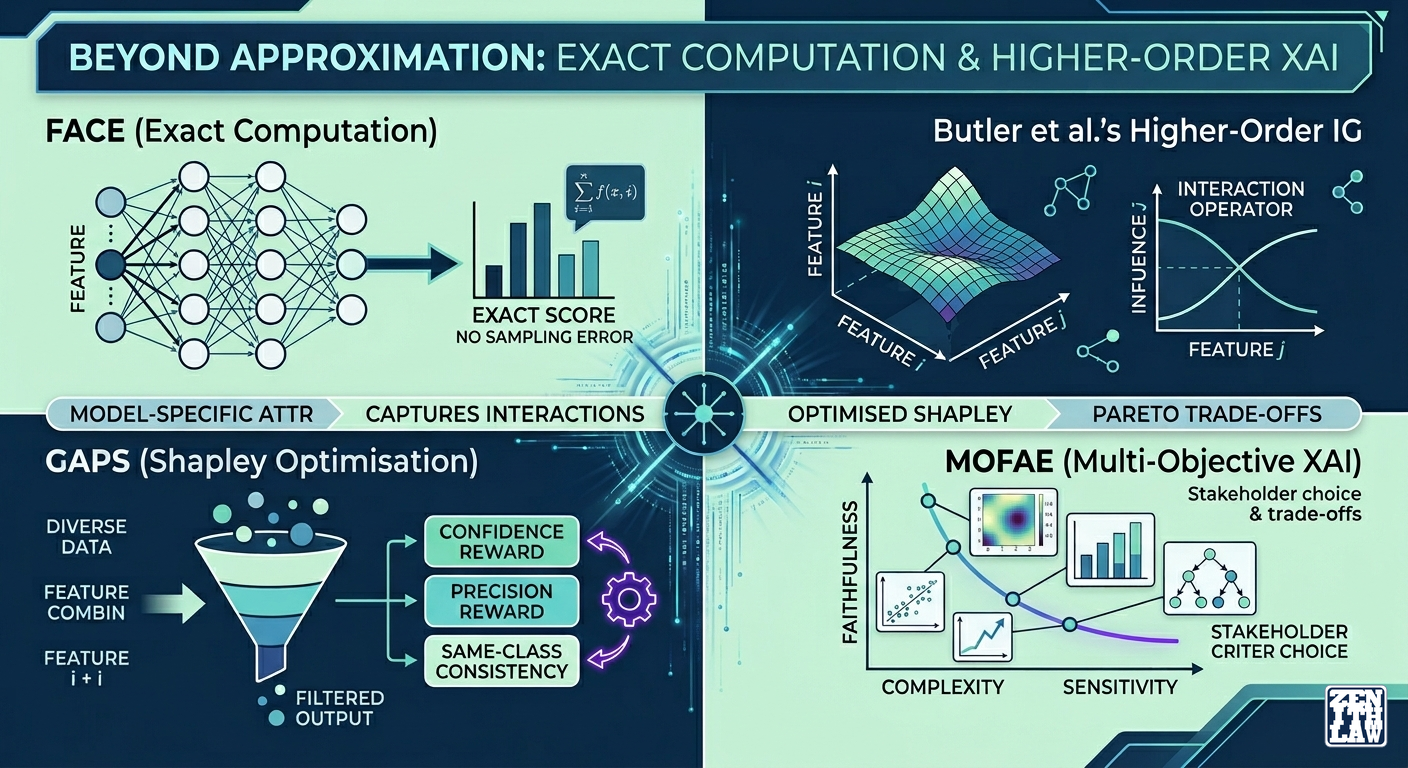
Published 14 June 2026 by Zenith Law
Standard attribution methods are approximate: they sample, they perturb, they linearise. Four recent papers abandon approximation in favour of exact computation, higher-order interaction modelling, explicit optimisation of evaluation criteria, and...
Published 10 June 2026 by Zenith Law
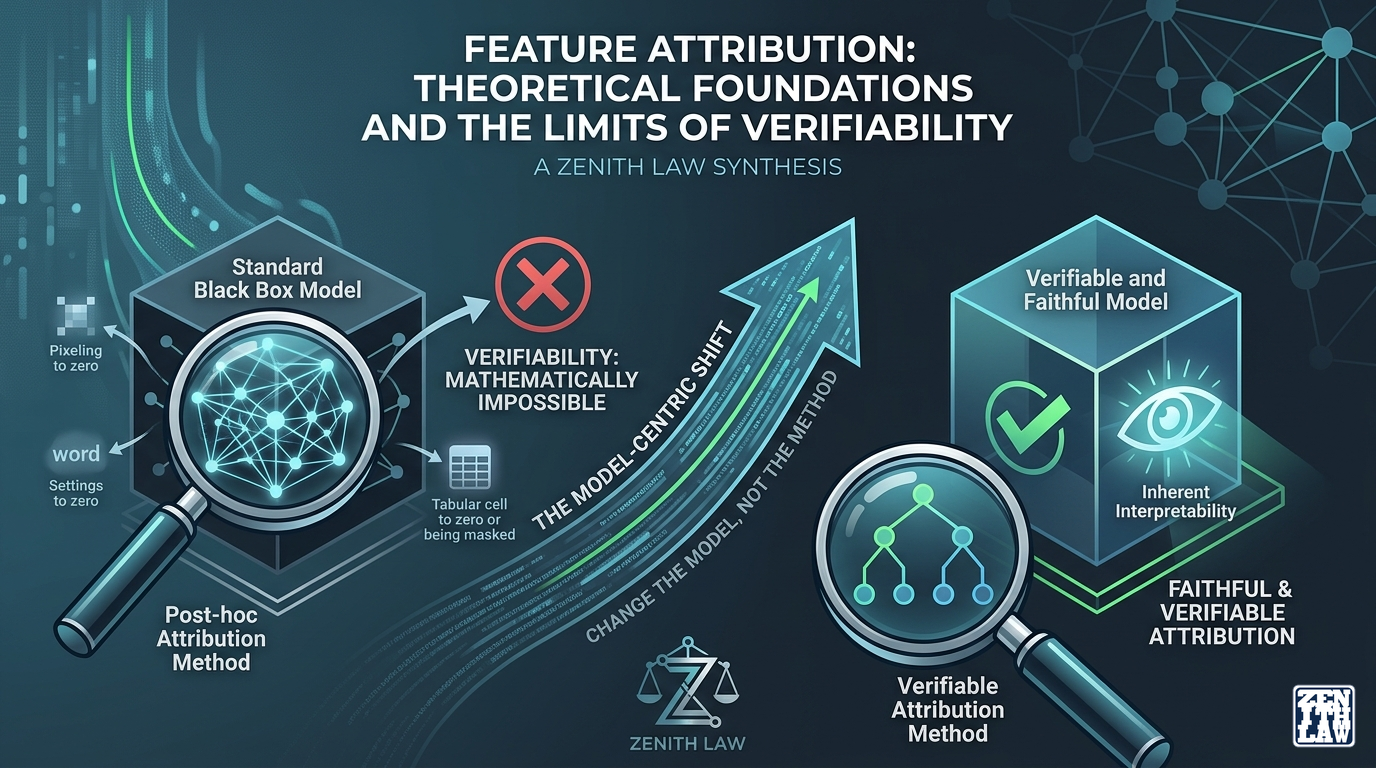
Three papers, published between 2020 and 2023, each proved a different piece of the same problem from complementary angles: the first uses causal reasoning to expose a fundamental flaw in Shapley-value-based attribution. The second proves that ver...

Published 6 June 2026 by Zenith Law
The standardisation debate is settled; the deployment challenge is sector-specific. This article examines how post-quantum cryptography is being applied across IoT, blockchain, energy infrastructure, automotive systems, cloud platforms, and covert...

Published 2 June 2026 by Zenith Law
The threat model is clear and the algorithm selections are published; what remains unresolved is how organisations actually migrate. This article examines standardisation outcomes, automated migration tooling, hybrid network architectures, and the...

Published 29 May 2026 by Zenith Law
Quantum computers threaten to dismantle the public-key infrastructure that underpins digital commerce, governance, and communication. This article examines the theoretical foundations of post-quantum cryptography, from lattice and code-based const...

Published 25 May 2026 by Zenith Law
The evidence review established what the RAG literature supports; the implementation playbook translated those findings into code. This third article addresses what can go wrong: the failure modes that standard RAG tutorials omit, the governance c...

Published 21 May 2026 by Zenith Law
This playbook translates the companion evidence review into a concrete implementation path using open-source libraries. It covers document ingestion, chunking strategies, hybrid retrieval, distractor filtering, prompt construction, evaluation pipe...

Published 17 May 2026 by Zenith Law
This review synthesises recent peer-reviewed literature on retrieval-augmented generation, spanning architectural surveys, empirical retrieval experiments, healthcare deployment analysis, generative IR evolution, and RAG-plus-fine-tuning fusion st...
Published 13 May 2026 by Zenith Law
This playbook converts exploratory Lightning micropayment research into practical build and operations steps. It separates cited findings from implementation judgment so teams can test assumptions before production rollout.

Published 9 May 2026 by Zenith Law
This review examines recent literature on Lightning-enabled micropayments, IoT machine-to-machine transactions, and autonomous agent payment infrastructure. It translates the literature into practical architecture choices, risk controls, and imple...

Published 6 May 2026 by Zenith Law
Recent works drawn from quantum communications, natural language processing, domain adaptation, and deep clustering, share a common premise: the geometry of learned representations in high-dimensional spaces determines system performance. This syn...

Published 1 May 2026 by Zenith Law
An enterprise agentic orchestration stack needs clear protocol boundaries, durable workflow control, typed interfaces, observable execution, and repeatable deployment. This guide combines MCP, A2A, ACP-oriented interoperability patterns, LangGraph...

Published 28 April 2026 by Zenith Law
MCP, A2A, and ACP represent three influential protocol approaches in agentic AI. This review compares their communication models, trust boundaries, and operational consequences for tenant-aware, cloud-native, vendor-agnostic, cross-border enterpri...
Published 24 April 2026 by Zenith Law
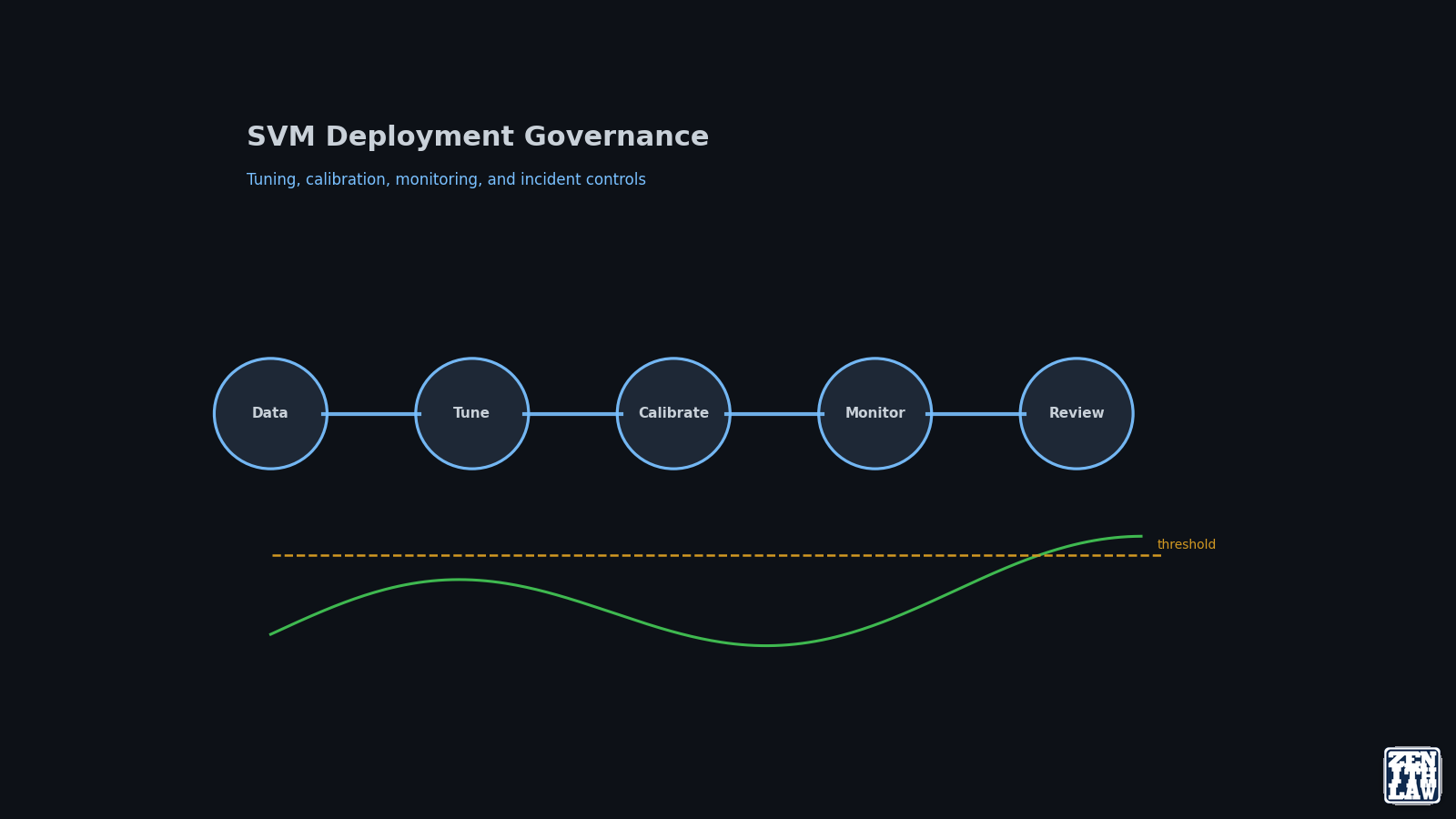
Support Vector Machine deployment quality depends less on one-time benchmark scores and more on repeatable tuning, calibration, and monitoring controls. Part 3 provides an operational playbook for stable model delivery.
Published 21 April 2026 by Zenith Law
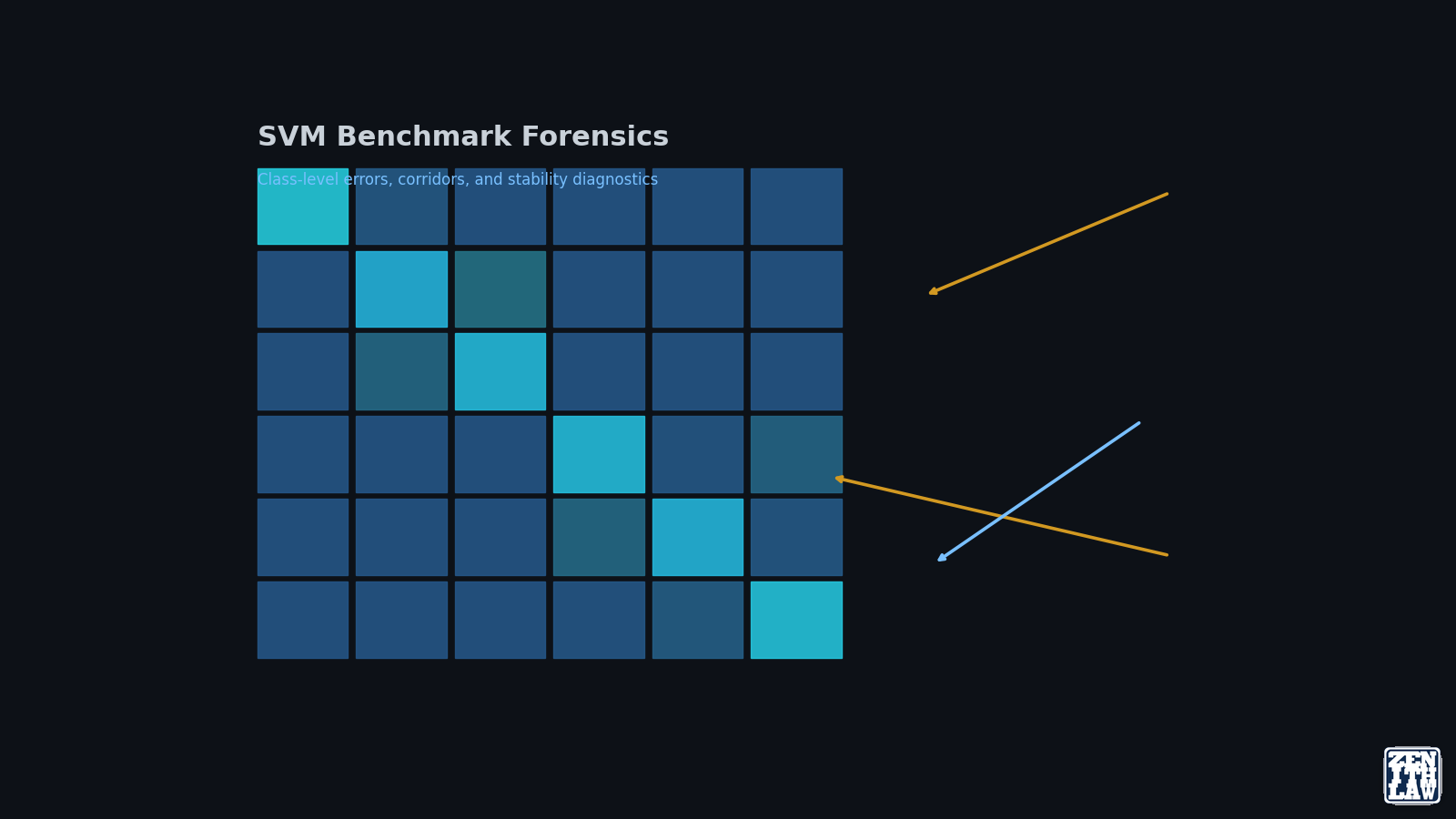
Support Vector Machine (SVM) benchmark results are only useful when read at class level, not just headline accuracy. Part 2 of this series analyzes UCI HAR outcomes, confusion flows, and geometry signals to show where SVM is strong, where it degra...
Published 17 April 2026 by Zenith Law
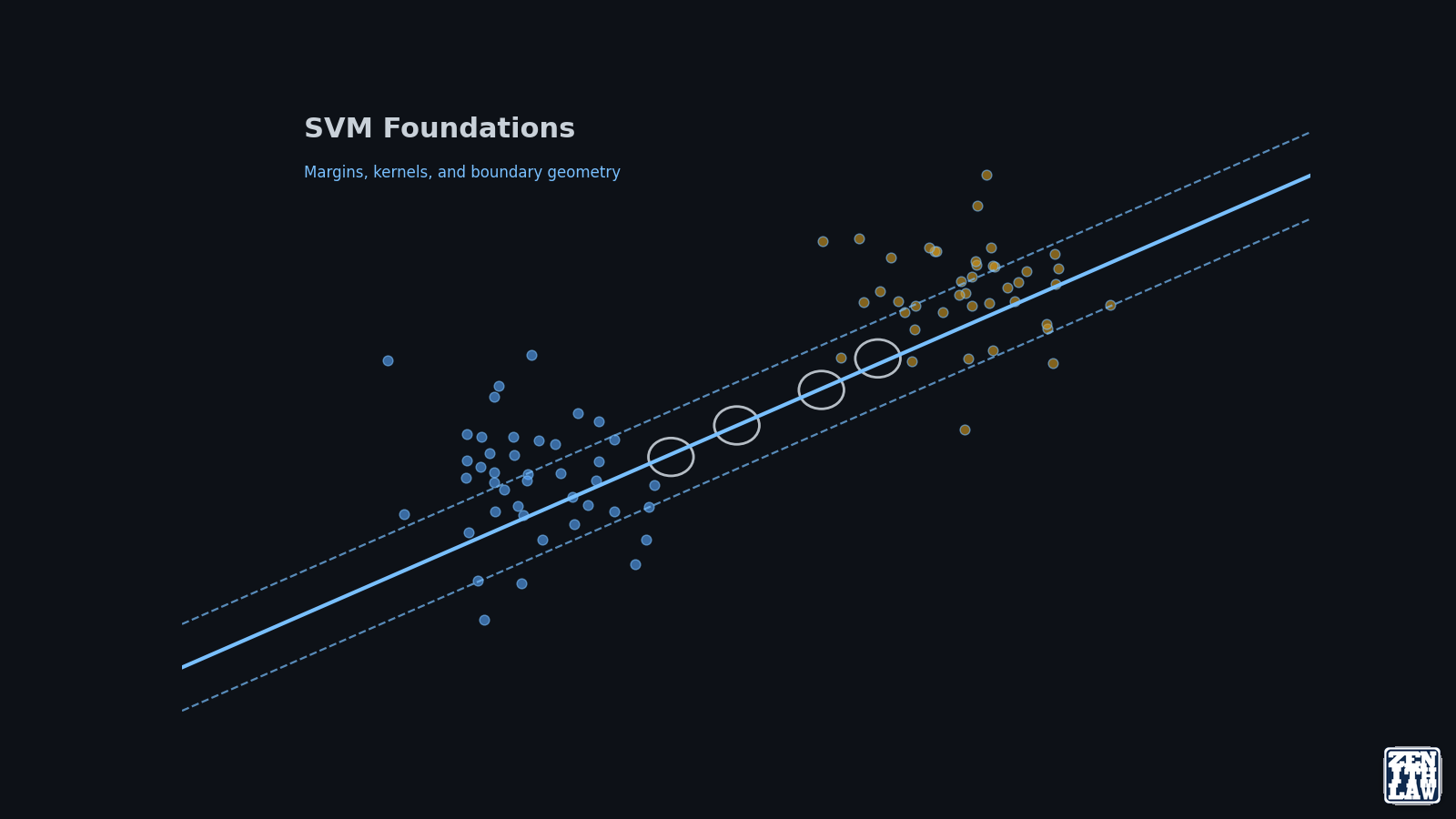
Support Vector Machine (SVM) is a supervised learning method that finds a maximum-margin decision boundary between classes. Part 1 of this series explains the core geometry, kernel behavior, and algorithm variants so you can make defensible model ...
Published 14 April 2026 by Zenith Law
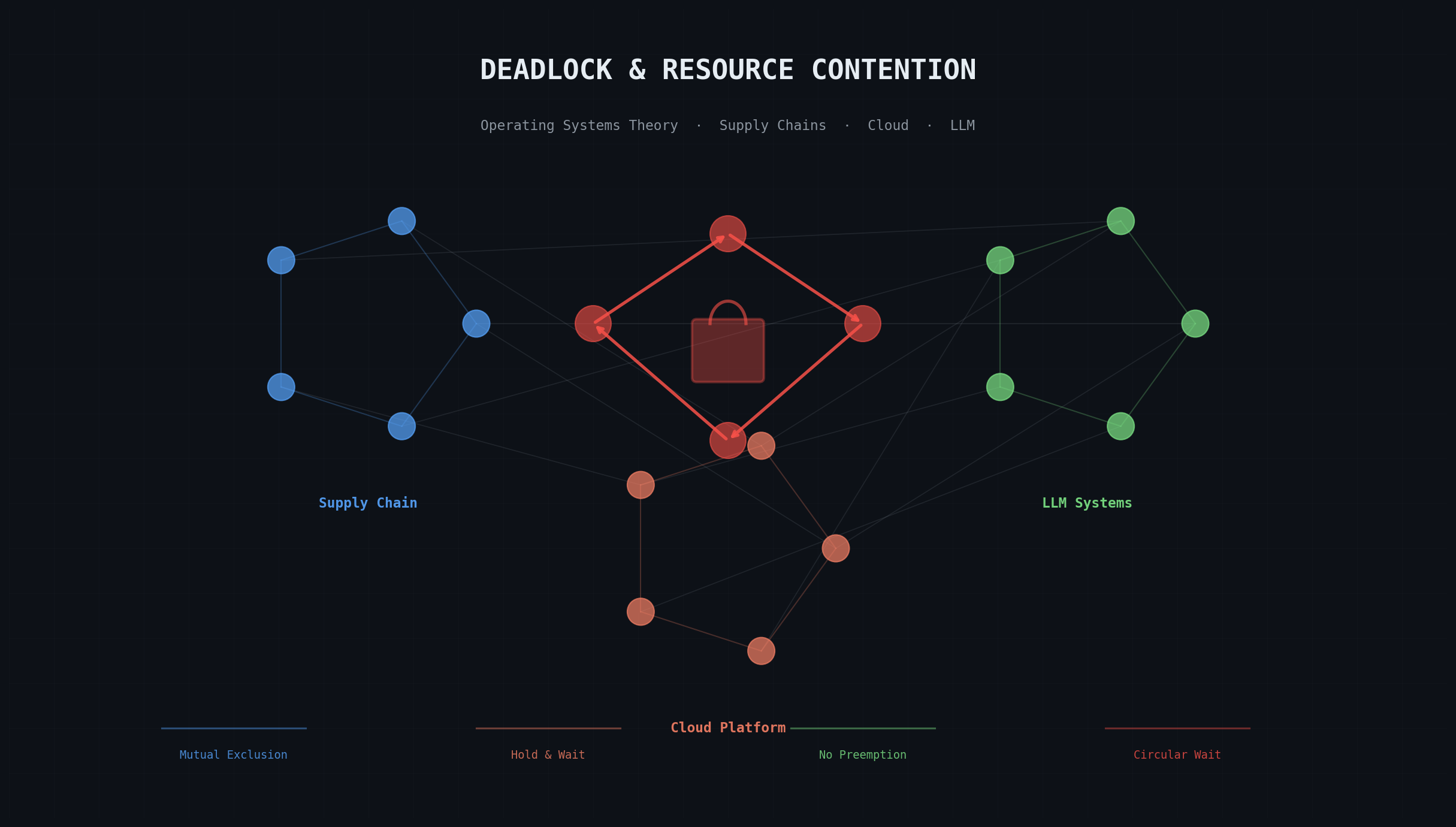
Deadlock requires four simultaneous conditions: mutual exclusion, hold and wait, no preemption, and circular wait. These Coffman conditions surface in supply chain attacks, cloud platform fragmentation, and LLM inference starvation as readily as i...
Published 13 April 2026 by Zenith Law
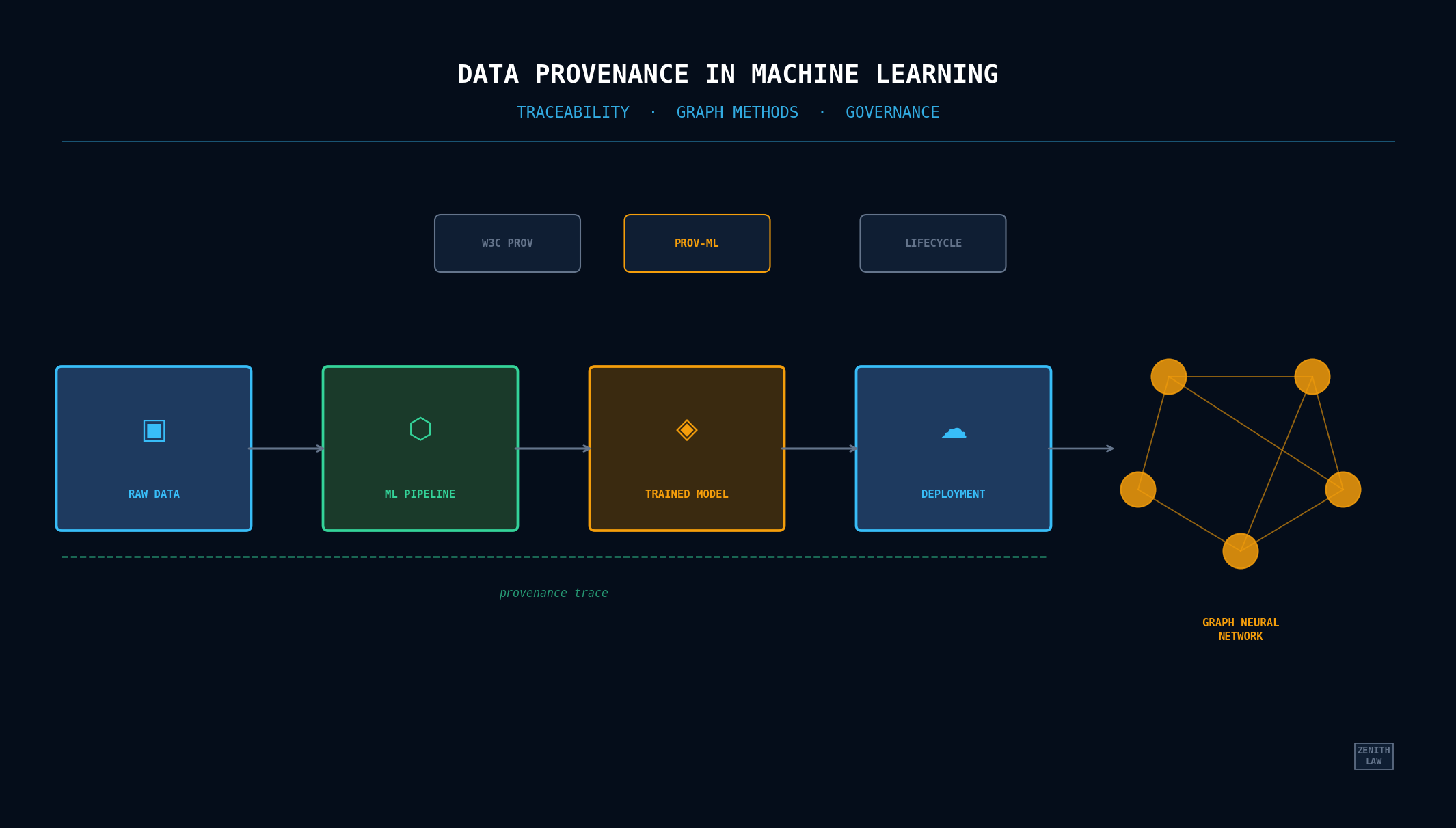
Data provenance in machine learning tracks where training data came from, how it was transformed, and which model versions resulted. Three scholarly papers evaluate this with graph neural networks, integration prototypes, and the PROV-ML standard....
Published 12 April 2026 by Zenith Law
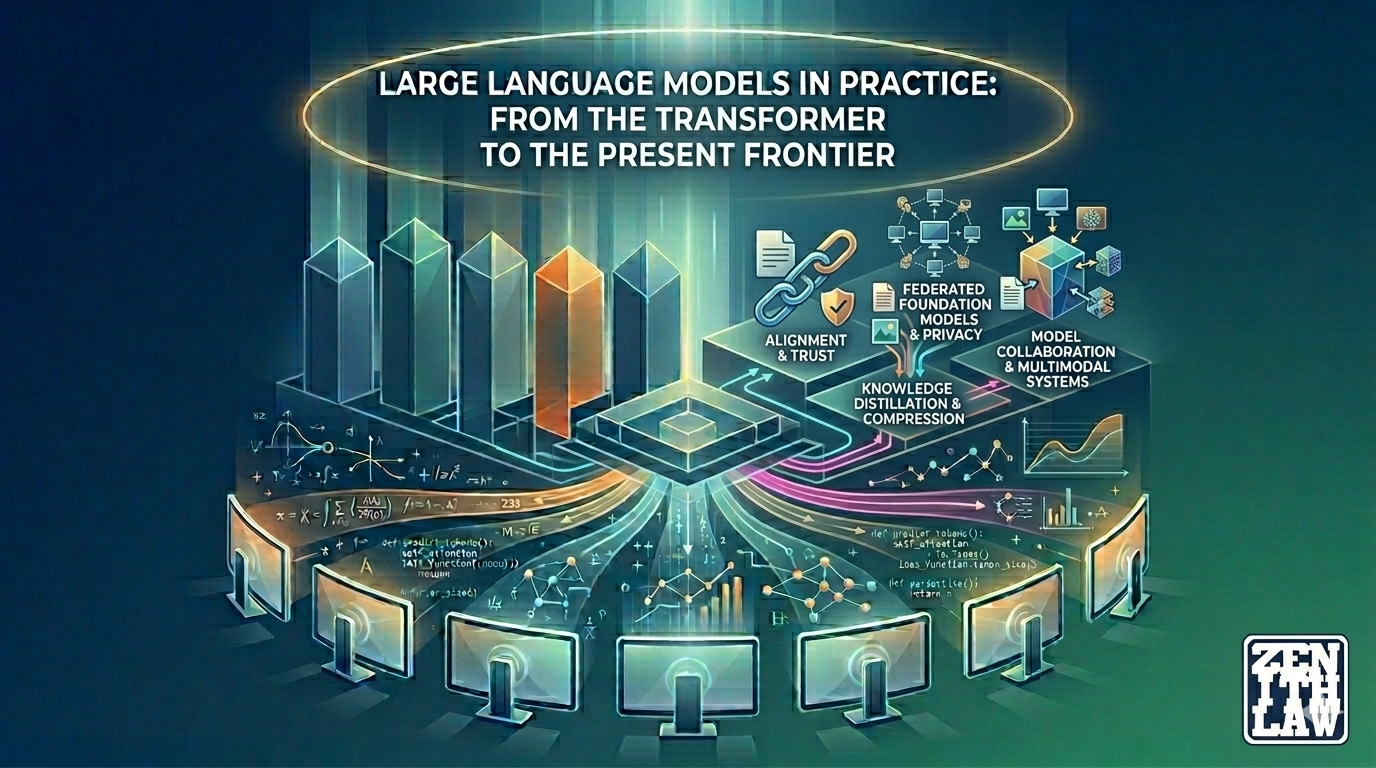
This article synthesizes insights from educational videos and scholarly works on large language models. It traces the evolution from the 2017 Transformer paper through GPT-3, alignment research, knowledge distillation, federated learning, and what...
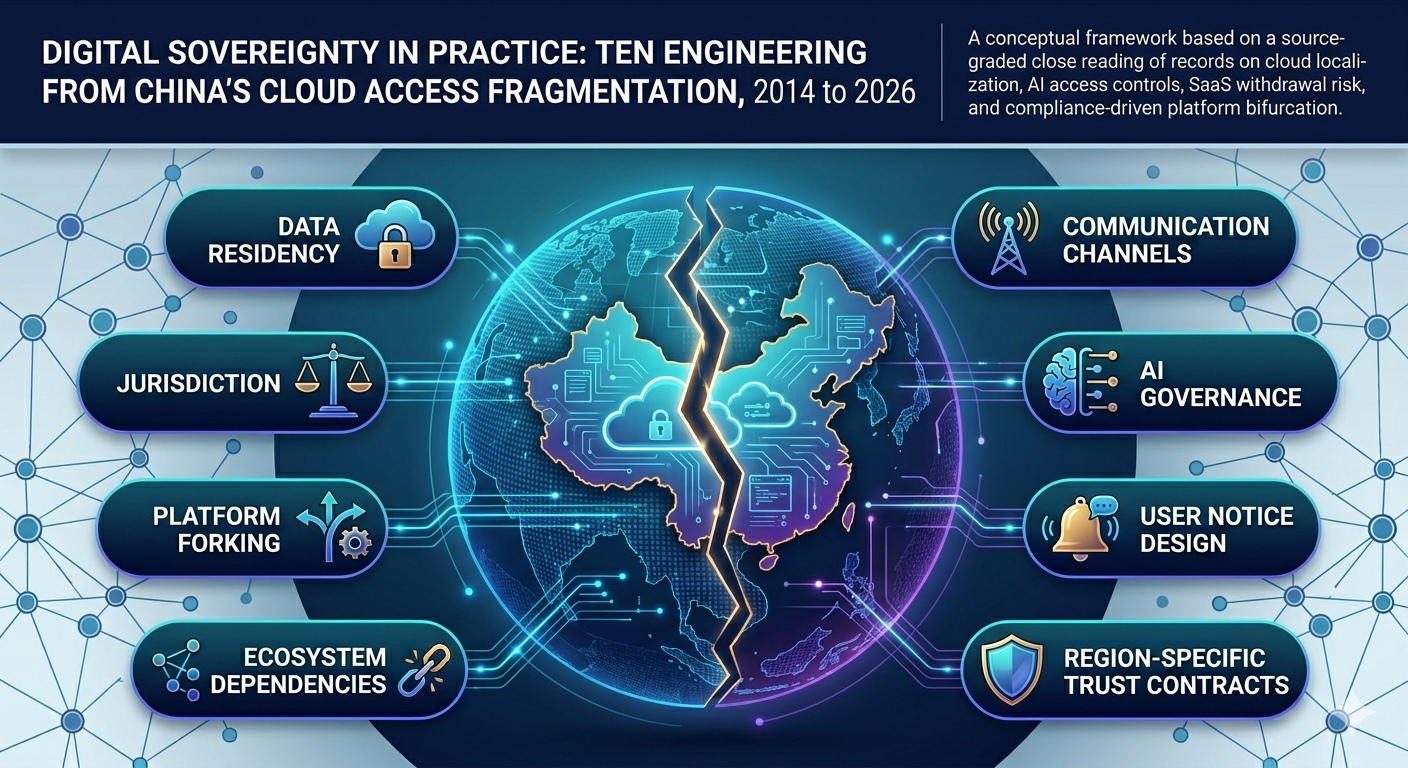
Published 10 April 2026 by Zenith Law
Cross-border SaaS delivery in China operates under a partitioned model driven by regulatory sovereignty, data localization law, and geopolitical risk. Azure, Salesforce, Unity, and AI services have all bifurcated or been blocked. This analysis rec...

Published 9 April 2026 by Zenith Law
On 30-31 March 2026, malicious axios npm versions 1.14.1 and 0.30.4 injected a counterfeit dependency that executed install-time malware across macOS, Windows, and Linux. Every material claim is mapped to verified sources. Evidence is separated fr...
Career Arc
A career built through deliberate pivots across domains, each deepening rather than replacing what came before. Starting in telecommunications and gaming infrastructure, then moving through financial technology within large international banks, then building and running an accredited training organisation, then leading technical delivery for a regulated healthcare platform, and now working hands-on on industrial IoT platforms and edge network simulation systems.
Data architecture runs as a consistent thread across these roles, applied within the regulatory environment of each domain. Security, compliance, and governance are considered from the outset of any engagement. This combination supports work where explanations, auditability, and compliance are important, and where engineering decisions intersect with legal and regulatory constraints.
Engineering Practice
Strategic Leadership
He operates at a director or vice president level of influence without managing people directly. He guides company-wide technical direction through credibility, mentorship, and relationships rather than direct control, and explains complex technical realities to executive management in business and financial terms. He acts as an autonomous troubleshooter and high-level escalation point for mission-critical technical challenges, while remaining hands-on across the stack.
Full-Stack Scope
Go, Python, Java, TypeScript, and C#/.NET across frontend (Vue 3, Nuxt 4, Quasar, React 19, Next.js 15), backend (.NET 8, Spring Boot 3.x, FastAPI, Node.js), infrastructure (Kubernetes/k3s, Terraform, Helm, Azure, DigitalOcean), protocols (protobuf, MQTT, RabbitMQ, gRPC, TCP sockets), and databases (PostgreSQL, SQL Server, MongoDB). The stack is treated as a whole rather than in layers, from binary protocol debugging at the wire level through cloud infrastructure provisioning to accessible and performant user interfaces.
AI-Augmented Development
Building and governing AI-augmented engineering tooling forms part of current daily practice. Develops custom GitHub Copilot agents, instruction files, and MCP server integrations that encode domain knowledge for AI-assisted engineering. Maintains governance ecosystems enforcing code quality and security posture when AI tools are in the development loop. Deploys LLM inference infrastructure (vLLM, Ollama) and builds autonomous multi-agent orchestration systems for code analysis and deployment validation.
Testing & Quality
Unit testing across Vitest, Go testing, pytest, xUnit, JUnit. E2E testing with Playwright and Cypress. WCAG 2.2 AA accessibility compliance (axe-core audits). Performance validation for virtual scroll rendering and large dataset handling.
Training Practice
As Director and Lead Trainer of an accredited training organisation holding direct relationships with AXELOS, APMG International, PMI, ISACA, (ISC)2, and PEOPLECERT, and as an Approved Trainer certified across multiple certification bodies:
| Metric | Value |
|---|---|
| Teaching and coaching hours | Extensive, spanning multiple programmes |
| Students trained | Broad range, junior to executive level |
| Countries delivered in | Multiple countries and regions |
| Enterprise clients | Dozens of organisations |
| Professional subjects | Wide range across the portfolio |
| Certification bodies affiliated | Multiple global bodies |
Subjects include, but are not limited to, project and programme management (PMP, PRINCE2, MSP), agile (AgilePM, DSDM), IT service management (ITIL Expert, ITIL 4), information security (CISSP, CCSP, CISA, CISM), risk management (M_o_R, PMI-RMP), change management, and action learning coaching.
Frequently Asked Questions
Who Is Zenith Law And What Does He Publish?
Zenith Law is an engineering strategist, polyglot engineer, accredited trainer, and doctoral researcher with professional experience in regulated industries across multiple countries. He operates as an executive-tier individual contributor who shapes technical strategy, drives organisational impact, and bridges the gap between deep engineering and business goals. His career runs from telecommunications and gaming infrastructure through financial technology in large international banks and an accredited training organisation to a regulated healthcare platform and current work on industrial IoT platforms and edge network simulation systems. He publishes analysis on cybersecurity, AI governance, digital sovereignty, and resilient software systems. Each post surveys academic literature or real incidents, distills lessons, and produces implementation guidance.
What Is His Research Focus?
Professional Doctorate in Data Science (University of East London) researching explainability and generalisability in multi-modal deception detection across text, audio, video, and physiological data. Legal education spans a GDL and an LL.M. in International Corporate and Financial Law, alongside published technical writing corpus (2024 to 2026) bridging academic research and production engineering, including series on post-quantum cryptography, retrieval augmented generation, support vector machines, agentic systems, and data provenance.
How Should Teams Use This Profile Page?
Use this profile to validate expertise alignment first, then open related publications to map ideas into architecture decisions, control design, incident response planning, and delivery governance.
Does This Profile Page Provide Legal Advice?
No. This page is educational and informational only. It is not legal advice and is not a substitute for jurisdiction-specific legal advice from qualified counsel.
Curated Testimonials
“Zenith is very professional and combines all of his skills and expertise in programming and cyber security with a legal and compliance background to bring his sessions to life. A very knowledgeable individual on advanced topics and get them across audiences of very mixed capability.” — Stephen Morrow, Software Security Research Engineer at eBay (formerly Senior Manager, Cyber Security at PwC)
“Zenith is an incredibly knowledgeable individual, with insights and understanding that cover the cross section of both tech and law second to none. Patient and articulate, Zenith always goes the extra mile to ensure his students do well.” — Dan Miles, Cyber Operations Manager at PwC
“In all my years of learning, I have not come across such a knowledgeable teacher as Zenith. He knew the subject inside out from every aspect — business and real world examples, from a student’s perspective taking the exam, from a policy and legal perspective and as a deeply technical computer science expert.” — Maria Carmen Aad, Experian UK&I Third Party Risk Manager
“His approach was thoroughly professional and Zenith is an authority on the course material. He is focused and ensures that you understand the topics and gives good advice on how to approach the accreditation exam.” — Stuart Turner, Director, Sapien IT
“A fantastic tutor who had an excellent grasp of the entire ITIL lifecycle. He used many real world scenarios to help make sense of the course content which really helped it sink in.” — Stephen McBride, Head of Service Delivery at Domino’s Pizza Group
“Zenith has a highly engaging style, he brings energy to some of the more challenging topics and keeps the whole class engaged and attentive.” — Dom Peace, Global PC Operations Manager at Procter & Gamble